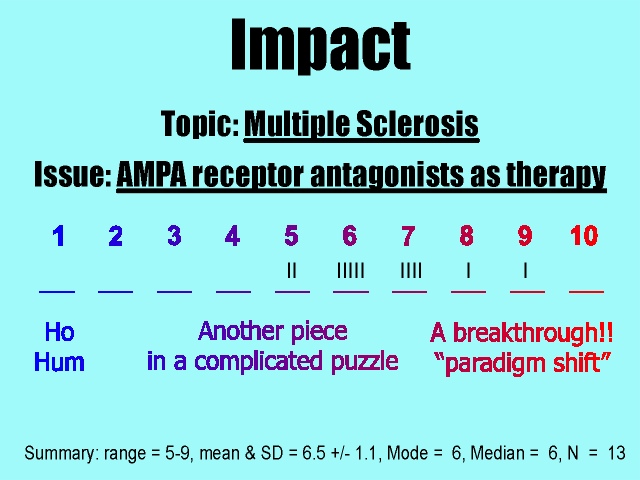
Glutamate excitotoxicity mediated by the AMPA/kainate type of glutamate receptors damages not only neurons but also the myelin-producing cell of the central nervous system, the oligodendrocyte. In multiple sclerosis, myelin, oligodendrocytes and some axons are lost as a result of an inflammatory attack on the central nervous system. Because glutamate is released in large quantities by activated immune cells, we expected that during inflammation in MS, glutamate excitotoxicity might contribute to the lesion. We addressed this by using the AMPA/kainate antagonist NBQX to treat mice sensitized for experimental autoimmune encephalomyelitis, a demyelinating model that mimics many of the clinical and pathologic features of multiple sclerosis. Treatment resulted in substantial amelioration of disease, increased oligodendrocyte survival and reduced dephosphorylation of neurofilament H, an indicator of axonal damage. Despite the clinical differences, treatment with NBQX had no effect on lesion size and did not reduce the degree of central nervous system inflammation. In addition, NBQX did not alter the proliferative activity of antigen-primed T cells in vitro, further indicating a lack of effect on the immune system. Thus, glutamate excitotoxicity seems to be an important mechanism in autoimmune demyelination, and its prevention with AMPA/kainate antagonists may prove to be an effective therapy for multiple sclerosis.
Autoimmune encephalomyelitis ameliorated by AMPA antagonists, Smith T, Groom A, Zhu B, Turski L, Nat Med 6:62-66, 2000.
Multiple sclerosis is an immune-mediated disorder of the central nervous system leading to progressive decline of motor and sensory functions and permanent disability. The therapy of multiple sclerosis is only partially effective, despite anti-inflammatory, immunosuppresive and immunomodulatory measures. White matter inflammation and loss of myelin, the pathological hallmarks of multiple sclerosis, are thought to determine disease severity. Experimental autoimmune encephalomyelitis reproduces the features of multiple sclerosis in rodents and in nonhuman primates. The dominant early clinical symptom of acute autoimmune encephalomyelitis is progressive ascending muscle weakness. However, demyelination may not be profound and its extent may not correlate with severity of neurological decline, indicating that targets unrelated to myelin or oligodendrocytes may contribute to the pathogenesis of acute autoimmune encephalomyelitis. Here we report that within the spinal cord in the course of autoimmune encephalomyelitis not only myelin but also neurons are subject to lymphocyte attack and may degenerate. Blockade of glutamate AMPA receptors ameliorated the neurological sequelae of autoimmune encephalomyelitis, indicating the potential for AMPAantagonists in the therapy of multiple sclerosis.